mirror of
https://github.com/harvard-edge/cs249r_book.git
synced 2026-03-08 23:03:55 -05:00

305 lines
17 KiB
Markdown
305 lines
17 KiB
Markdown
# 机器学习系统
|
||
*人工智能系统工程的原理与实践*
|
||
|
||
<p align="center">
|
||
<a href="../README.md">English</a> •
|
||
<a href="README_zh.md">中文</a> •
|
||
<a href="README_ja.md">日本語</a> •
|
||
<a href="README_ko.md">한국어</a>
|
||
</p>
|
||
|
||
<div align="center">
|
||
|
||
<p align="center">
|
||
|
||
[](https://github.com/harvard-edge/cs249r_book/actions/workflows/book-validate-dev.yml)
|
||
[](https://github.com/harvard-edge/cs249r_book/actions/workflows/tinytorch-validate-dev.yml)
|
||

|
||
[](https://github.com/harvard-edge/cs249r_book/blob/dev/LICENSE.md)
|
||
[](#-citation--license)
|
||
[](https://opencollective.com/mlsysbook)
|
||
|
||
</p>
|
||
|
||
<p align="center">
|
||
|
||
<!-- Reader Navigation -->
|
||
**[📖 在线阅读](https://mlsysbook.ai)** •
|
||
**[Tiny🔥Torch](https://mlsysbook.ai/tinytorch)** •
|
||
**[📄 下载 PDF](https://mlsysbook.ai/assets/downloads/Machine-Learning-Systems.pdf)** •
|
||
**[📓 下载 EPUB](https://mlsysbook.ai/epub)** •
|
||
**[🌐 探索生态系统](https://mlsysbook.org)**
|
||
|
||
</p>
|
||
|
||
📚 **2026 年 MIT Press 将出版纸质版**
|
||
|
||
</div>
|
||
|
||
---
|
||
|
||
## 使命
|
||
|
||
**世界正急速构建 AI 系统,却缺乏系统性的工程方法。**
|
||
|
||
这正是我们所说的 AI 工程。
|
||
|
||
**AI 工程是一门学科,致力于在真实世界中构建高效、可靠、安全且稳健的智能系统,而不仅仅是孤立的模型。**
|
||
|
||
**我们的使命:** 将 AI 工程确立为基础学科,与软件工程和计算机工程并列,通过教学让人们掌握端到端智能系统的设计、构建与评估方法。AI 的长期影响将由能够将想法转化为可运行、可信赖系统的工程师塑造。
|
||
|
||
---
|
||
|
||
## 本仓库包含的内容
|
||
|
||
本仓库是 AI 系统工程的开放学习栈。
|
||
|
||
它包括教材源码、TinyTorch、硬件套件以及即将推出的将原理与可运行代码、真实设备相连接的协作实验(co‑labs)。
|
||
|
||
---
|
||
|
||
## 入门指南
|
||
|
||
根据你的目标选择路径。
|
||
|
||
**READ** 从[教材](https://mlsysbook.ai)开始。先阅读[第 1 章](https://www.mlsysbook.ai/contents/core/introduction/introduction.html)和[Benchmarking 章节](https://mlsysbook.ai/contents/core/benchmarking/benchmarking.html)。
|
||
|
||
**BUILD** 按照[入门指南](https://mlsysbook.ai/tinytorch/getting-started.html)启动 TinyTorch。从 Module 01 开始,逐步学习 CNN、Transformer 以及 MLPerf 基准。
|
||
|
||
**DEPLOY** 选择[硬件套件](https://mlsysbook.ai/kits),在 Arduino、Raspberry Pi 等边缘设备上进行实验。
|
||
|
||
**CONNECT** 在[Discussions](https://github.com/harvard-edge/cs249r_book/discussions)中打声招呼,我们会尽快回复。
|
||
|
||
---
|
||
|
||
## 学习栈
|
||
|
||
下面的示意图展示了教材如何与动手实践和部署相连接。阅读教材后,挑选你感兴趣的路径:
|
||
|
||
```
|
||
┌───────────────────────────────────────────────────────────────────────────────┐
|
||
│ │
|
||
│ MACHINE LEARNING SYSTEMS │
|
||
│ Read the Textbook │
|
||
│ │
|
||
│ Theory • Concepts • Best Practices │
|
||
│ │
|
||
└───────────────────────────────────────┬───────────────────────────────────────┘
|
||
│
|
||
┌─────────────┼─────────────┐
|
||
│ │ │
|
||
▼ ▼ ▼
|
||
┌───────────────────────────────────────────────────────────────────────────────┐
|
||
│ HANDS‑ON ACTIVITIES │
|
||
│ (pick one or all) │
|
||
│ │
|
||
│ ┌─────────────────┐ ┌─────────────────┐ ┌─────────────────┐ │
|
||
│ │ │ │ │ │ │ │
|
||
│ │ SOFTWARE │ │ TINYTORCH │ │ HARDWARE │ │
|
||
│ │ CO‑LABS │ │ FRAMEWORK │ │ LABS │ │
|
||
│ │ │ │ │ │ │ │
|
||
│ │ EXPLORE │ │ BUILD │ │ DEPLOY │ │
|
||
│ │ │ │ │ │ │ │
|
||
│ │ Run controlled │ │ Understand │ │ Engineer under │ │
|
||
│ │ experiments on │ │ frameworks by │ │ real constraints│ │
|
||
│ │ latency, memory,│ │ implementing │ │ memory, power, │ │
|
||
│ │ energy, cost │ │ them │ │ timing, safety │ │
|
||
│ │ │ │ │ │ │
|
||
│ │ (coming 2026) │ │ │ │ Arduino, Pi │
|
||
│ └─────────────────┘ └─────────────────┘ └─────────────────┘ │
|
||
│ │
|
||
│ EXPLORE BUILD DEPLOY │
|
||
│ │
|
||
└───────────────────────────────────────┬───────────────────────────────────────┘
|
||
│
|
||
▼
|
||
┌───────────────────────────────────────────────────────────────────────────────┐
|
||
│ │
|
||
│ AI OLYMPICS │
|
||
│ Prove Mastery │
|
||
│ │
|
||
│ Compete across all tracks • University teams • Public leaderboards │
|
||
│ │
|
||
│ (coming 2026) │
|
||
│ │
|
||
└───────────────────────────────────────────────────────────────────────────────┘
|
||
```
|
||
|
||
| | Component | What You Do | Link |
|
||
|---|-----------|-------------|------|
|
||
| **READ** | [📖 教材](https://mlsysbook.ai) | 理解机器学习系统概念 | [book/](book/README.md) |
|
||
| **EXPLORE** | 🔮 Software Co‑Labs | 进行延迟、内存、能耗、成本实验 | *Coming 2026* |
|
||
| **BUILD** | [🔥 TinyTorch](https://mlsysbook.ai/tinytorch) | 亲手实现框架 | [tinytorch/](tinytorch/README.md) |
|
||
| **DEPLOY** | [🔧 Hardware Kits](https://mlsysbook.ai/kits) | 在受内存、功耗、时延、安全约束的硬件上工程实现 | [kits/](kits/README.md) |
|
||
| **PROVE** | 🏆 AI Olympics | 参与所有赛道的竞技与基准测试 | *Coming 2026* |
|
||
|
||
**每条路径的学习内容:**
|
||
- **EXPLORE** 解释 *为什么* —— 了解权衡。改变 batch size、精度、模型结构,观察延迟、内存和准确率的变化。
|
||
- **BUILD** 解释 *怎么做* —— 理解内部实现。自行实现 autograd、优化器、注意力机制,感受 TensorFlow 与 PyTorch 的工作原理。
|
||
- **DEPLOY** 解释 *在哪里* —— 了解约束。真实硬件的内存上限、功耗预算和时延要求下进行实验。
|
||
|
||
---
|
||
|
||
## 你将学到的内容
|
||
|
||
本教材教会你在机器学习与系统工程的交叉点思考。每一章都将算法概念与支撑其运行的基础设施相连接。
|
||
|
||
### ML ↔ Systems Bridge
|
||
|
||
| ML Concept | Systems Concept | What You Learn |
|
||
|------------|-----------------|----------------|
|
||
| Model parameters | Memory constraints | 如何在资源受限的设备上容纳大型模型 |
|
||
| Inference latency | Hardware acceleration | GPU、TPU、加速器如何执行神经网络 |
|
||
| Training convergence | Compute efficiency | 混合精度与优化技术如何降低计算成本 |
|
||
| Model accuracy | Quantization and pruning | 在保持性能的前提下压缩模型的方法 |
|
||
| Data requirements | Pipeline infrastructure | 如何构建高效的数据加载与预处理流水线 |
|
||
| Model deployment | MLOps practices | 在生产环境中监控、版本管理与更新模型的方式 |
|
||
| Privacy constraints | On‑device learning | 如何在不将数据上传云端的情况下进行学习与适应 |
|
||
|
||
### 书的结构
|
||
|
||
| Part | Focus | Chapters |
|
||
|------|-------|----------|
|
||
| **I. Foundations** | 基础概念 | Introduction, ML Systems, DL Primer, Architectures |
|
||
| **II. Design** | 构建模块 | Workflow, Data Engineering, Frameworks, Training |
|
||
| **III. Performance** | 加速性能 | Efficient AI, Optimizations, HW Acceleration, Benchmarking |
|
||
| **IV. Deployment** | 实际部署 | MLOps, On‑device Learning, Privacy, Robustness |
|
||
| **V. Trust** | 可信可靠 | Responsible AI, Sustainable AI, AI for Good |
|
||
| **VI. Frontiers** | 前沿展望 | Emerging trends and future directions |
|
||
|
||
---
|
||
|
||
## 与众不同之处
|
||
|
||
本书是一本活的教材。随着领域的发展,我们会持续更新,并吸收社区的反馈。
|
||
|
||
AI 的发展速度如闪电般,但支撑其运行的工程模块并不会像头条新闻那样快速更迭。本项目围绕这些稳固的基础构建。
|
||
|
||
把它想象成乐高。新套装层出不穷,但积木本身保持不变。只要学会如何拼接积木,就能构建任何东西。这里的 "AI 积木" 就是让 AI 正常工作的坚实系统原理。
|
||
|
||
无论是阅读章节、动手实验还是提供反馈,你都在帮助让这些理念对下一代学习者更加易得。
|
||
|
||
### Research to Teaching Loop
|
||
|
||
我们使用相同的循环进行研究与教学:定义系统问题 → 构建参考实现 → 基准测试 → 将其转化为课程与工具 → 让他人能够复现与扩展。
|
||
|
||
| Loop Step | Research Artifacts | Teaching Artifacts |
|
||
|-----------|-------------------|-------------------|
|
||
| **Measure** | Benchmarks, suites, metrics | Benchmarking chapter, assignments |
|
||
| **Build** | Reference systems, compilers, runtimes | TinyTorch modules, co‑labs |
|
||
| **Deploy** | Hardware targets, constraints, reliability | Hardware labs, kits |
|
||
|
||
---
|
||
|
||
## 支持我们的工作
|
||
|
||
我们目标是在 **2030 年之前培养 100 万学习者**,让 AI 工程成为共享的、可教学的学科,而不是零散的实践集合。每一次星标、分享与贡献都在推动这一目标前进。
|
||
|
||
### 为什么 GitHub Stars 很重要?
|
||
|
||
<div align="center">
|
||
|
||
*有度量才会改进。*
|
||
|
||
每一个星标代表一位相信 AI 系统应在严格且真实约束下进行工程化的学习者、教育者或支持者。
|
||
|
||
[](https://github.com/harvard-edge/cs249r_book/stargazers)
|
||
|
||
[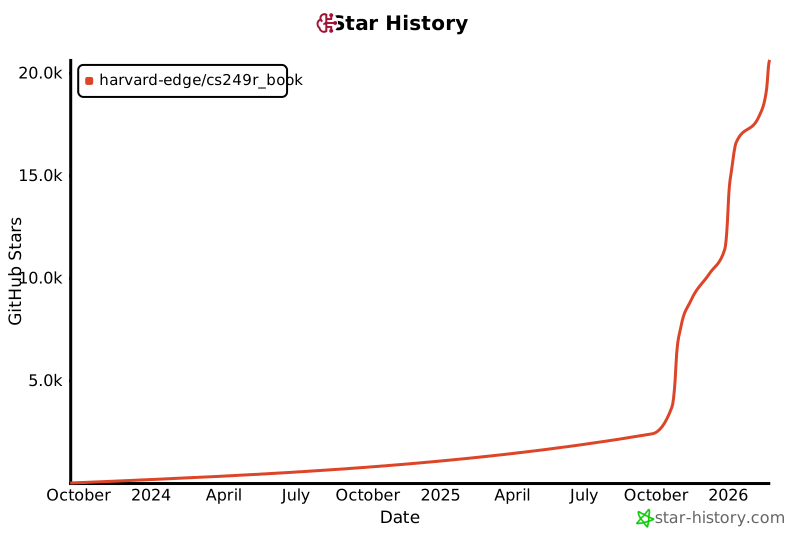](https://star-history.com/#harvard-edge/cs249r_book&Date)
|
||
|
||
1 位学习者 → 10 位 → 100 位 → 1,000 位 → **10,000 位** → 100,000 位 → **1M 位**
|
||
|
||
</div>
|
||
|
||
星标不是终点,而是信号。
|
||
|
||
一个可见的社区让大学、基金会和行业合作伙伴更容易采用本资源、捐赠硬件、资助研讨会。此举降低了下一所学校、下一间教室以及下一批学习者的门槛。
|
||
|
||
捐助将流向 [Open Collective](https://opencollective.com/mlsysbook),用于 TinyML4D 研讨会、为资源匮乏的课堂提供硬件套件以及维持免费、开放资源的基础设施。
|
||
|
||
一次点击即可打开下一间教室、下一位贡献者以及下一代 AI 工程师。
|
||
|
||
### 为使命捐款
|
||
|
||
<div align="center">
|
||
|
||
All contributions go to [Open Collective](https://opencollective.com/mlsysbook), a transparent fund that supports educational outreach.
|
||
|
||
[](https://opencollective.com/mlsysbook)
|
||
|
||
</div>
|
||
|
||
---
|
||
|
||
## 社区与资源
|
||
|
||
| Resource | Description |
|
||
|---|---|
|
||
| [📖 **教材**](https://mlsysbook.ai) | 交互式在线教材 |
|
||
| [🔥 **TinyTorch**](https://mlsysbook.ai/tinytorch) | 从零实现机器学习框架 |
|
||
| [🔧 **Hardware Kits**](https://mlsysbook.ai/kits) | 部署至 Arduino、Raspberry Pi、边缘设备 |
|
||
| [🌐 **Ecosystem**](https://mlsysbook.org) | 资源、研讨会、社区 |
|
||
| [💬 **Discussions**](https://github.com/harvard-edge/cs249r_book/discussions) | 提问与想法 |
|
||
|
||
---
|
||
|
||
## 贡献指南
|
||
|
||
我们欢迎对教材、TinyTorch 与硬件套件的贡献!
|
||
|
||
| 我想… | 前往 |
|
||
|--------------|---------|
|
||
| 修正错别字或改进章节 | [book/docs/CONTRIBUTING.md](book/docs/CONTRIBUTING.md) |
|
||
| 添加 TinyTorch 模块或修复 bug | [tinytorch/CONTRIBUTING.md](tinytorch/CONTRIBUTING.md) |
|
||
| 改进硬件实验 | [kits/README.md](kits/README.md) |
|
||
| 报告问题 | [GitHub Issues](https://github.com/harvard-edge/cs249r_book/issues) |
|
||
| 提问 | [GitHub Discussions](https://github.com/harvard-edge/cs249r_book/discussions) |
|
||
|
||
---
|
||
|
||
## 引用与许可证
|
||
|
||
### 引用
|
||
```bibtex
|
||
@inproceedings{reddi2024mlsysbook,
|
||
title = {MLSysBook.AI: Principles and Practices of Machine Learning Systems Engineering},
|
||
author = {Reddi, Vijay Janapa},
|
||
booktitle = {2024 International Conference on Hardware/Software Codesign and System Synthesis (CODES+ ISSS)},
|
||
pages = {41--42},
|
||
year = {2024},
|
||
organization = {IEEE},
|
||
url = {https://mlsysbook.org}
|
||
}
|
||
```
|
||
|
||
### 许可证
|
||
|
||
本项目采用双许可证结构:
|
||
|
||
| Component | License | What It Means |
|
||
|-----------|---------|---------------|
|
||
| **Book content** | [CC BY‑NC‑ND 4.0](LICENSE.md) | 在署名、非商业、禁止演绎的前提下自由分发 |
|
||
| **TinyTorch code** | [Apache 2.0](tinytorch/LICENSE) | 自由使用、修改、分发并附带专利保护 |
|
||
|
||
教材内容(章节、图表、解释)属于教育资料,应在署名且非商业使用的前提下自由共享。软件框架则是供任何人使用、修改、集成的工具。
|
||
|
||
---
|
||
|
||
## 贡献者
|
||
|
||
以下优秀的贡献者让本资源更加完善:
|
||
|
||
<!-- ALL-CONTRIBUTORS-LIST:START - Do not remove or modify this section -->
|
||
<!-- ... (contributors omitted for brevity) -->
|
||
<!-- ALL-CONTRIBUTORS-LIST:END -->
|
||
|
||
---
|
||
|
||
<div align="center">
|
||
|
||
**[⭐ 在 GitHub 上给我们加星](https://github.com/harvard-edge/cs249r_book#support-this-work) • [✉️ 订阅更新](https://buttondown.email/mlsysbook) • [💬 参与讨论](https://github.com/harvard-edge/cs249r_book/discussions) • [🌐 访问 mlsysbook.ai](https://mlsysbook.ai)**
|
||
|
||
*本教材由 MLSysBook 社区倾情打造。*
|
||
|
||
</div>
|